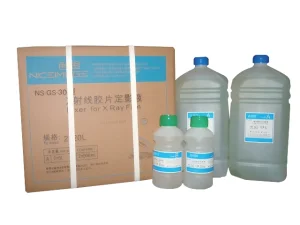
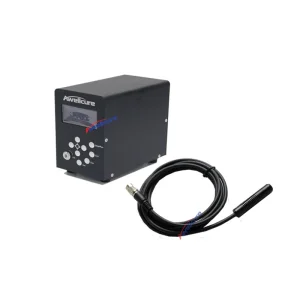
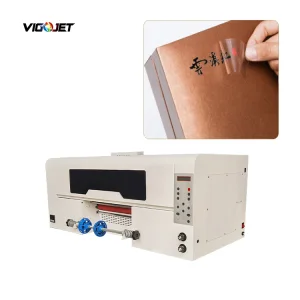
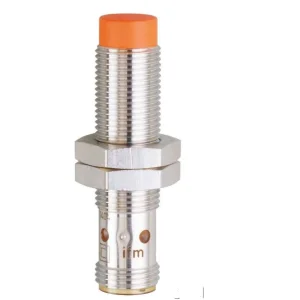
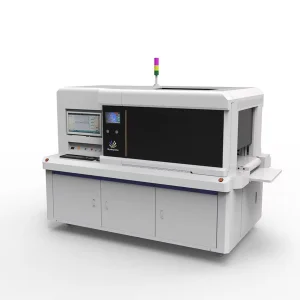
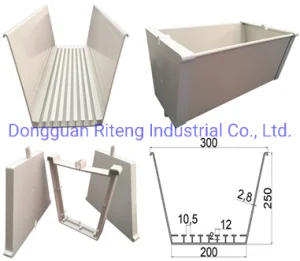
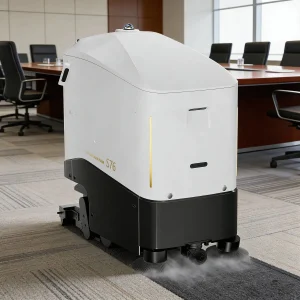
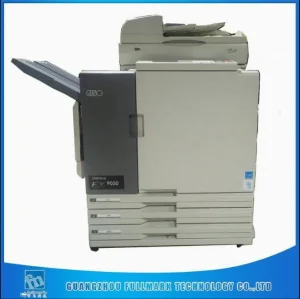
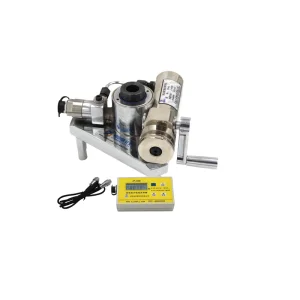
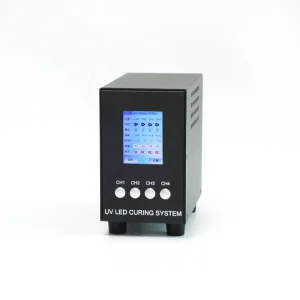
Eight production-focused modules from the supplied product ecosystem, covering print systems, UV curing, industrial control, marking, and factory automation.
Search demand for top 10 robotic printing systems manufacturers usually hides a more practical intent: the buyer wants a shortlist of suppliers that can integrate a digital print engine with automated handling, deliver repeatable quality, and support the line after installation. The title “manufacturer” is singular for a reason. In most projects, the final integrator or OEM takes responsibility for the complete printing cell, not just the printhead. That cell may include robotic loading, plasma or primer treatment, inkjet deposition, pinning, UV curing, vision inspection, reject handling, and MES reporting.
A credible comparison should therefore separate marketing claims from verifiable capability. Ask for substrate samples, color tolerance reports, first-pass yield data, maintenance schedules, spare-parts lead times, local engineering coverage, and documentation for the destination market. For a packaging converter, the critical issue may be food-contact compliance and high-speed single-pass output. For a ceramic tile factory, it may be edge definition, glaze compatibility, and 24/7 dust resistance. For an electronics line, it may be traceability, static control, and tiny-character marking.
This guide is written as an editorial diligence framework, not as a paid ranking. It uses the Zhuhai Vector Print product ecosystem as one reference point for the type of industrial modules buyers encounter: single-pass and multi-pass inkjet systems, high-speed scanning printers, controllers, UV curing, coding, and adjacent automation. Any claim in a shortlist should be confirmed through factory acceptance testing (FAT), site acceptance testing (SAT), reference calls, and contract-level performance guarantees.
A robot arm alone does not make a printing system robotic. The system must be designed for repeatable positioning, substrate registration, error recovery, and data exchange. Four layers matter most.
The printhead, ink circulation, waveform, and nozzle management determine resolution, gray-scale control, and fluid compatibility. Industrial systems should expose printhead health data and allow recipe-based switching between substrates.
Servo axes, encoders, vacuum tables, robotic end-effectors, and vision alignment must hold registration at production speed. Robust systems plan for jam recovery and product variation rather than assuming perfect substrates.
UV LED curing, primer application, plasma treatment, and inline cameras convert ink into a saleable product. Closed-loop inspection should flag missing nozzles, misregistration, color drift, and defects before downstream packaging.
An industrial controller should speak to PLCs, MES, ERP, and quality systems. Audit trails, OEE dashboards, remote diagnostics, and secure update paths turn a printer into a managed production asset.
Use the following ten dimensions as a weighted scorecard. The weights should change by application; a ceramic line and a medical marking line do not share the same risk profile.
Confirm compatible printhead generations, ink chemistry, circulation design, and replacement cost. A low machine price can be offset by poor nozzle life or locked consumables.
Test alignment accuracy across the full bed or web width. Ask how the system handles skewed parts, flexible substrates, and thermal drift during long production runs.
The printer should connect cleanly to loaders, conveyors, dryers, robots, and packaging equipment. Look for standard industrial protocols and documented handshake logic.
UV LED output, chill rolls, primer stations, and plasma treatment affect adhesion and finish. Validate cure windows on the actual production substrate, not only on paper.
Inline cameras should detect defects, verify barcodes, and feed data back to the controller. Closed-loop compensation is more valuable than a post-production inspection table.
Access panels, nozzle-cleaning routines, waste-ink handling, and mean time to repair matter in a 24/7 plant. Ask for daily, weekly, and monthly maintenance tasks.
A manufacturer should provide tested recipes for the target material, color profile, speed, and acceptable defect threshold. Require physical samples and a signed test protocol.
Run FAT in the factory and SAT at your site. Track first-pass yield, color consistency, registration, and downtime across shifts, not just peak demonstration speed.
Identify critical components, lead times, and alternative sources. A supplier with transparent inventory planning is safer than a low-cost bid with unclear dependencies.
Compare spare parts, service travel, training, power consumption, consumables, compliance documentation, and software updates over five years. Purchase price is only one line item.
Robotic printing systems perform best when the application, local supply chain, labor model, and compliance environment are considered together. The same print engine may require different handling, ink, and service design in different regions.
In China, the Middle East, and Southeast Asia, tile producers use digital decoration for high-mix designs, short production runs, and just-in-time delivery. Local dust, heat, and glaze chemistry must be designed into the print cell, not treated as an afterthought.
In Europe and North America, converters face labor shortages and demand for versioned packaging. Single-pass UV inkjet and robotic material handling can reduce changeover time, but ink compliance, substrate priming, and color management must be validated for each SKU.
South and Southeast Asia combine large garment clusters with growing digital customization. Localized support means fast access to printheads, ink, humidity control, and operators who can manage color consistency across cotton, polyester, and blended fabrics.
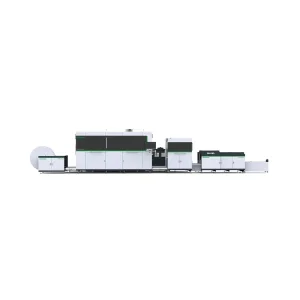
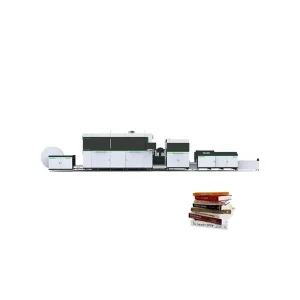
Options for low-energy rotary book printing support shorter runs, distributed publishing, and inventory reduction. In local markets, the key metrics are binding integration, page-block registration, energy use, and predictable maintenance.
UV LED spot curing, industrial marking, and traceability systems serve electronics and medical production. Cleanroom compatibility, static control, small-character readability, and audit trails often matter more than raw print speed.
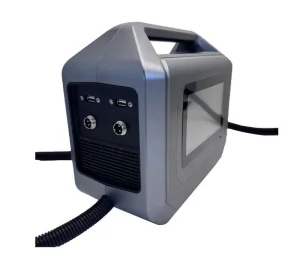
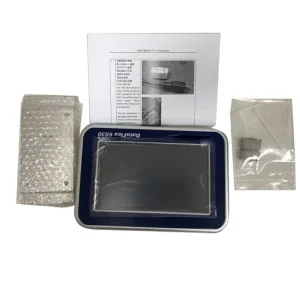
Industrial controllers, PLC modules, cleaning robots, and vertical-farm hardware show how printing cells fit a broader automation plan. The printer must share data with conveyors, AGVs, environmental systems, and factory dashboards.
The roadmap below is not a promise from any single manufacturer. It is a practical planning model for buyers who expect a five-year asset life and want to avoid automation dead ends.
Now to 12 months. Buyers deploy a digital print engine with conveyors, pick-and-place units, UV curing, and basic vision inspection. Success depends on stable recipes, clear interfaces, and operator training.
12 to 24 months. Inline inspection, automatic nozzle compensation, and MES reporting reduce manual intervention. The system begins to measure yield and energy use in real time, enabling accountable continuous improvement.
Two to five years. Robotic loading, self-diagnostics, predictive maintenance, and cloud-based recipe management allow small teams to run high-mix production. Cybersecurity and software validation become board-level concerns.
Five years and beyond. Print cells will coordinate with digital twins, sustainable ink systems, and factory-wide scheduling. The winning suppliers will be those that prove interoperability and lifecycle support, not only printhead specifications.
China remains a major source of industrial printing equipment because of cluster depth, engineering speed, and component availability. For buyers, resilience depends less on a country label and more on supplier redundancy, process control, and export discipline.
Zhuhai and the wider Pearl River Delta provide access to electronics, precision machining, sheet-metal fabrication, inks, sensors, and logistics. This density shortens engineering feedback loops and supports faster spare-parts replenishment.
Resilient factories qualify alternative suppliers for critical boards, motors, cables, and printhead interfaces. Buyers should ask for a bill of materials risk review and a documented change-notification process.
Close supplier networks allow mechanical, firmware, and ink-delivery teams to test improvements quickly. That speed must be paired with version control, validation records, and traceability to avoid uncontrolled changes.
Efficient factories prepare packing lists, declarations, test reports, and Incoterms early. For overseas projects, shipping method, voltage configuration, spare-parts kit, and commissioning plan should be agreed before production release.
Globally, digital inkjet is moving from short-run niche production into mainstream manufacturing. Packaging converters are adopting single-pass systems for labels, cartons, and flexible packaging where versioning and faster changeovers matter. Ceramic and building-material producers use digital decoration for high-mix tile designs and just-in-time production. Textile printers are balancing digital customization with the cost advantages of conventional processes. In industrial marking, laser and inkjet systems are being integrated with vision and robotics to support traceability, serialization, and regulatory labeling.
At the same time, buyers face inflation in energy and labor, pressure to reduce waste, and stricter environmental documentation. This makes total cost of ownership more important than purchase price. A system that saves ink but requires frequent nozzle replacement, or one that prints quickly but needs highly skilled operators for every changeover, may not deliver the expected return. The commercial case should include uptime, yield, consumables, spare parts, service travel, and compliance costs.
Use the indicative chart below only to structure the discussion. It reflects qualitative editorial assessment of adoption momentum, not market-share data. Validate every assumption with your own product mix and line-level business case.
Local support is not a call-center promise. It is the practical ability to diagnose a fault, ship a part, train operators, and provide documentation that satisfies the destination market. Compliance should be built into the acceptance test, not added after installation.
Define response times, escalation paths, remote diagnostic access, and on-site commissioning. For export projects, clarify who performs the first-line fix and how travel time is charged.
Ask for a recommended spare-parts kit, critical-item lead times, and local stock locations. Consumable locking, ink shelf life, and waste handling should be clear before purchase.
Operator training should cover daily maintenance, color checks, nozzle recovery, and safety. Maintenance staff need troubleshooting trees, wiring diagrams, and version-controlled software procedures.
For the target market, verify machinery safety, EMC, low-voltage, and electrical configuration requirements. CE, UKCA, local voltage, guarding, emergency stops, and lockout procedures should be documented.
Request safety data sheets, RoHS or REACH declarations where applicable, and food-contact or indirect-food-contact evidence if relevant. UV ink handling and waste-ink disposal require written procedures.
Clarify data ownership, remote access controls, backup routines, and update policy. If the printer connects to MES or cloud services, cybersecurity responsibilities should be included in the contract.
A technology-driven industrial inkjet supplier located in Zhuhai, southern China, with a portfolio spanning single-pass, multi-pass, high-speed scanning, and controller technologies.
Zhuhai Vector Print Co., Ltd. is a technology-driven enterprise specializing in advanced industrial inkjet printing solutions for modern manufacturing. Located in Zhuhai, a key innovation hub in southern China, the company focuses on developing high-performance systems that deliver precision, speed, and reliability across diverse industrial applications.
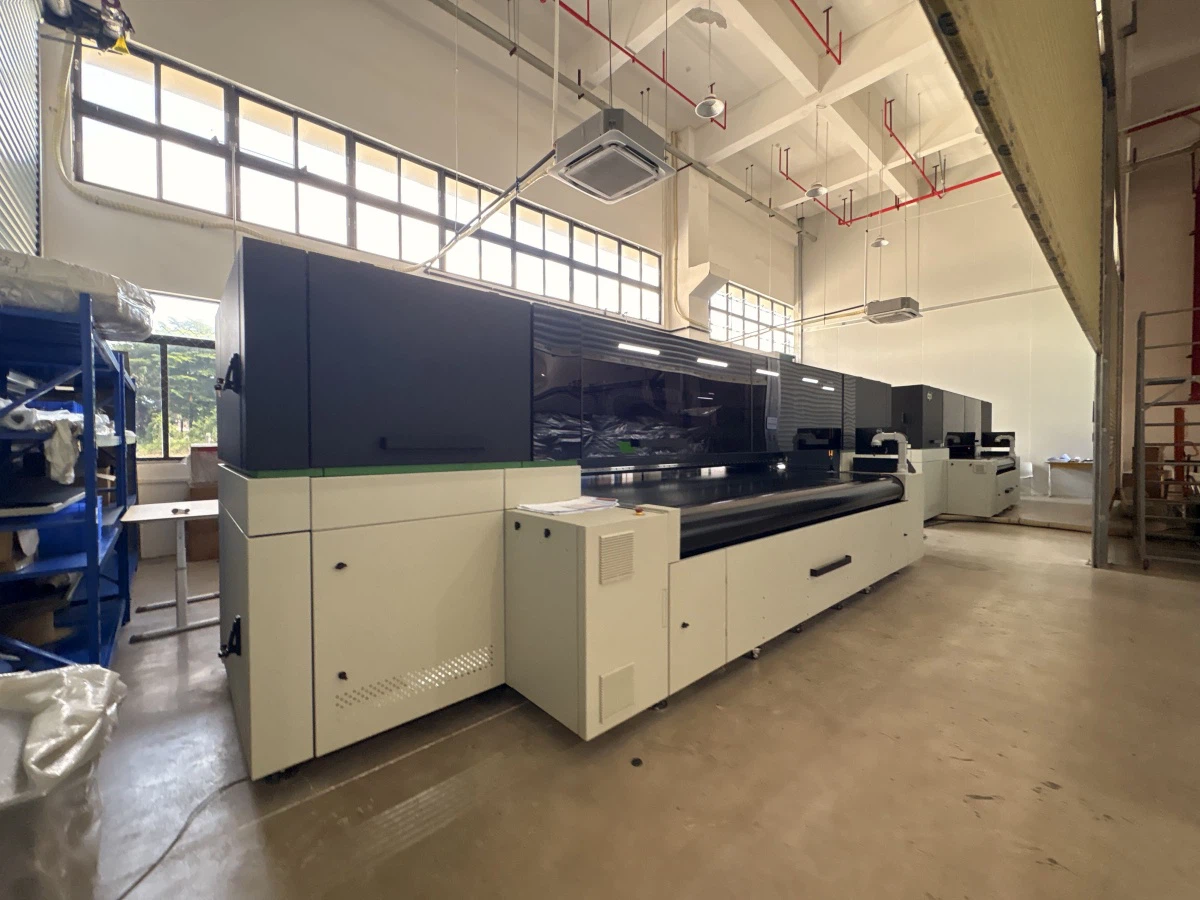

The company’s core product portfolio includes Single Pass Inkjet Printing Machines, Multi Pass Digital Inkjet Printers, High-Speed Scanning Inkjet Systems, and Industrial Inkjet Printing Controllers. These solutions are engineered to meet the evolving demands of industries such as ceramics, packaging, textiles, and building materials, enabling high-resolution output and consistent production quality.
Zhuhai Vector Print Co., Ltd. operates from a well-equipped production facility and is supported by a skilled team of engineers, R&D specialists, and technical service professionals. By integrating advanced printhead technology, intelligent control systems, and optimized ink delivery solutions, the company ensures stable performance and efficient workflow integration.
Committed to innovation and customer satisfaction, Zhuhai Vector Print continues to invest in research and development while expanding its global presence. The company aims to provide reliable, scalable, and future-ready inkjet printing systems that help manufacturers enhance productivity and stay competitive in a rapidly evolving market.
Within the context of this buyer’s guide, Zhuhai Vector Print is most relevant as a supplier of industrial inkjet building blocks: single-pass printing machines, multi-pass digital printers, high-speed scanning systems, and industrial controllers. These modules can serve as the print engine inside a larger robotic printing cell when combined with material handling, curing, inspection, and factory software. Buyers should map the company’s portfolio to their specific substrate, speed, color, and compliance requirements rather than assuming that a machine built for ceramics will perform identically on plastic packaging or medical components.
Responsible due diligence should include a sample test, printhead life and maintenance plan, ink compatibility confirmation, factory acceptance testing, electrical and safety documentation, spare-parts availability, and local service responsibilities. For export projects, request the applicable Declaration of Conformity, EMC and safety reports, packaging and wood-pallet compliance, and a clear Incoterms proposal. This is the level of evidence that supports E-E-A-T in industrial procurement: specific, verifiable, and tied to the buyer’s production scenario.
Frequently asked questions from engineering, operations, and procurement teams comparing robotic printing systems and industrial inkjet manufacturers.
A robotic printing system integrates a digital print engine with automated substrate handling, registration, curing, inspection, and software control. The difference is system-level repeatability: the cell must recover from jams, maintain registration, and report quality data without constant manual intervention.
Start with the application, not the brand list. Score each supplier on print quality on your substrate, automation interfaces, FAT and SAT performance, local service, spare-parts lead time, compliance documentation, and five-year total cost of ownership. Require samples and reference calls before shortlisting.
Common applications include ceramic and building-material decoration, packaging and labels, textiles, book printing, electronics marking, medical PCBA curing, and industrial traceability. The best fit is usually a production line with high mix, frequent changeovers, strict traceability, or a need to reduce manual handling.
China’s industrial clusters can shorten component sourcing, engineering iteration, and spare-parts replenishment. However, resilience must be verified through dual sourcing, change notification, factory process control, export documentation, and a clear service plan. Country of origin alone is not a quality guarantee.
Depending on the market and application, request machinery safety and electrical compliance reports, EMC documentation, CE or UKCA declarations where applicable, RoHS or REACH statements, ink safety data sheets, and food-contact evidence if relevant. Also confirm voltage, guarding, language, and packaging requirements.
Define response-time targets, remote diagnostic access, on-site commissioning, operator training, and a critical spare-parts kit. Clarify which parts are stocked locally, how firmware updates are controlled, and who owns warranty decisions. A clear service matrix is more useful than a generic “24/7 support” claim.
Additional production modules from the supplied product set, covering UV LED printing, laser marking, ceramic tile decoration, book printing, controllers, testing, and UV curing.
 Vector Print