Pioneering hardware solutions engineered for high performance, structural integrity, and multi-axis control integration.
Analyzing market demand, supply dynamics, and technical standards across global manufacturing verticals.
The global industrial manufacturing landscape is undergoing a monumental transition toward automation, traceablity, and high-fidelity marking. At the core of this transformation are wholesale laser engraving systems, which serve as foundational equipment in sectors ranging from semiconductor packaging and consumer electronics to automotive assembly and medical device serialization. Driven by strict regulatory mandates (such as the FDA’s Unique Device Identification (UDI) in healthcare and equivalent European CE marking standards), manufacturers require high-speed, contactless, and permanent marking solutions that do not compromise structural integrity.
Today, China represents the primary manufacturing powerhouse and global supplier of industrial laser systems. By consolidating upstream diode fabrication, precision optical lens coating, and digital galvo-scanner research within domestic technology clusters, Chinese manufacturers offer state-of-the-art machinery at unprecedented capital efficiency. Consequently, purchasing directors and systems integrators in North America, Western Europe, and Southeast Asia rely heavily on Chinese OEM/ODM partnerships to acquire industrial fiber, UV, and CO2 laser markers. This wholesale model has democratized laser processing, enabling smaller enterprises to access CNC precision while equipping large-scale factories with high-throughput, multi-gigahertz optical scanners.
Understanding the physics of light-matter interaction to optimize laser system selection.
Selecting the appropriate laser wavelength is critical to maximizing absorption rates and minimizing thermal distortion. Industrial lasers are generally categorized into three dominant wavebands: Fiber (Infrared, ~1064 nm), Green/UV (Visible/Ultraviolet, 355 nm - 532 nm), and CO2 (Far-Infrared, 10,600 nm). The choice of system directly dictates the Heat Affected Zone (HAZ), processing speed, and the molecular interaction with the target material.
| Laser Source Type | Typical Wavelength | Primary Target Materials | Thermal Footprint (HAZ) | Key Industrial Applications |
|---|---|---|---|---|
| Fiber (Q-Switched / MOPA) | 1064 nm | Alloyed Steels, Aluminum, Brass, Titanium, Hard Plastics | Moderate to High | Automotive VIN plates, tooling serialization, electronic casings. |
| Ultraviolet (UV) | 355 nm | Silicon, Glass, Sapphire, Biodegradable Plastics, Ceramics | Minimal ("Cold Marking") | Semiconductor wafer marking, medical ampoules, cosmetic packaging. |
| Carbon Dioxide (CO2) | 10,600 nm | Wood, Acrylic, Paper, Leather, Fabrics, Organic Substrates | High (Melting/Vaporization) | Apparel pattern cutting, packaging cartons, wood engraving. |
| MOPA Fiber (Variable Pulse) | 1064 nm (tunable pulse) | Stainless Steel, Anodized Alumina, Multi-color Metals | Controlled / Low | High-contrast black plastic marking, anodized color engraving. |
Information Gain Insight: While traditional Q-switched lasers maintain a fixed pulse duration, modern Master Oscillator Power Amplifier (MOPA) systems allow engineers to adjust pulse widths dynamically from 2 ns to 500 ns. This capability provides precise control over heat accumulation. Consequently, MOPA lasers can etch deep black markings onto anodized aluminum without stripping the protective oxide layer, or mark delicate medical-grade polymers without compromising biocompatibility.
How industrial control architectures bridge the gap between drop-on-demand printing and laser photo-ablation.
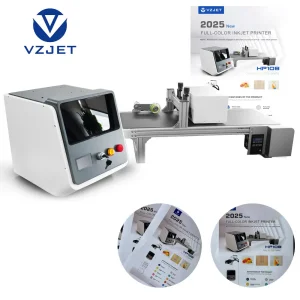
Zhuhai Vector Print Co., Ltd. is a technology-driven enterprise specializing in advanced industrial inkjet printing solutions for modern manufacturing. Located in Zhuhai, a key innovation hub in southern China, the company focuses on developing high-performance systems that deliver precision, speed, and reliability across diverse industrial applications.
The company’s core product portfolio includes Single Pass Inkjet Printing Machines, Multi Pass Digital Inkjet Printers, High-Speed Scanning Inkjet Systems, and Industrial Inkjet Printing Controllers. These solutions are engineered to meet the evolving demands of industries such as ceramics, packaging, textiles, and building materials, enabling high-resolution output and consistent production quality.
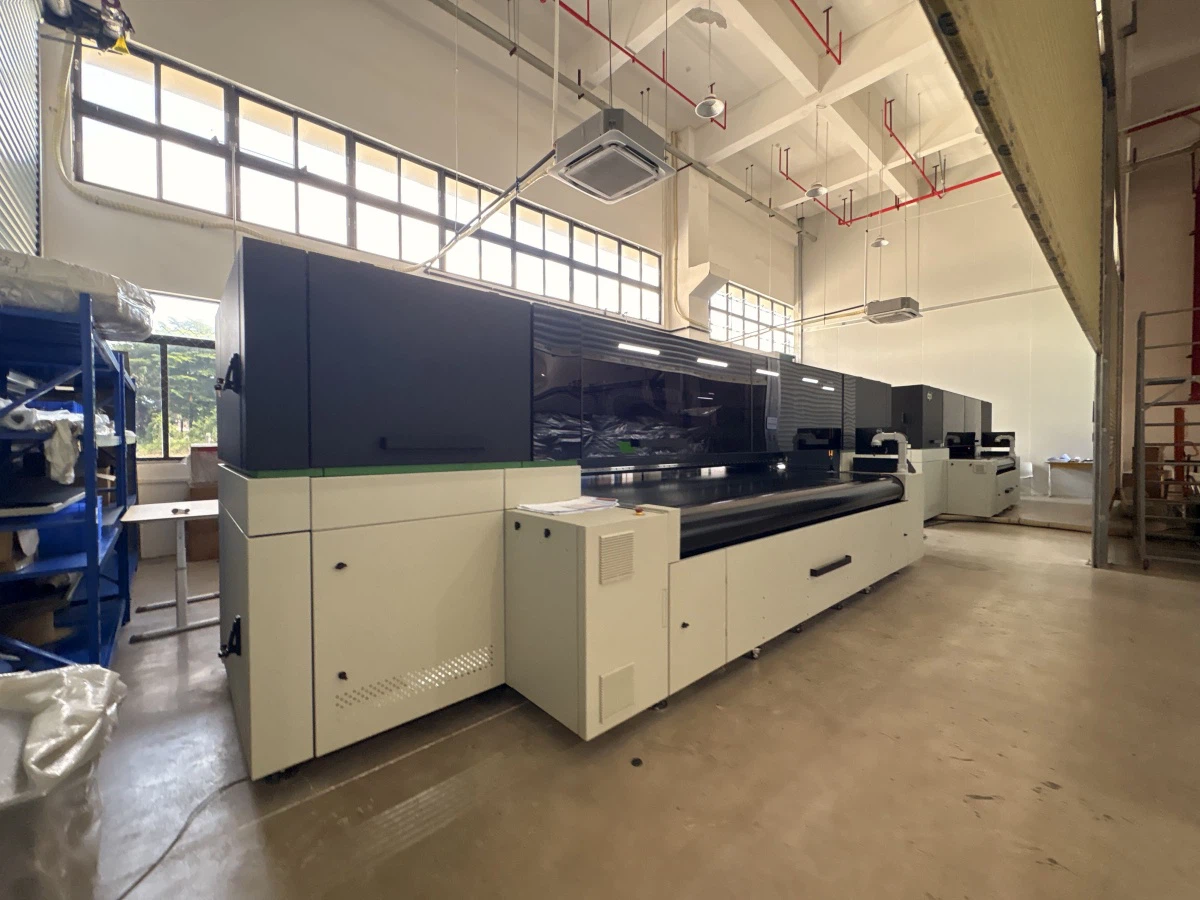
Zhuhai Vector Print Co., Ltd. operates from a well-equipped production facility and is supported by a skilled team of engineers, R&D specialists, and technical service professionals. By integrating advanced printhead technology, intelligent control systems, and optimized ink delivery solutions, the company ensures stable performance and efficient workflow integration.
Committed to innovation and customer satisfaction, Zhuhai Vector Print continues to invest in research and development while expanding its global presence. The company aims to provide reliable, scalable, and future-ready inkjet printing systems that help manufacturers enhance productivity and stay competitive in a rapidly evolving market.

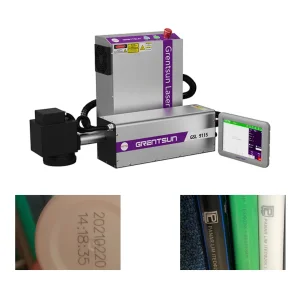
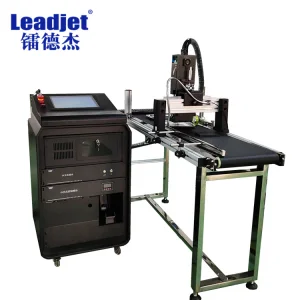
The technical convergence of industrial printing and laser processing has transformed manufacturing lines worldwide. Modern assembly configurations often utilize single-pass digital printers alongside high-speed galvo laser engraving heads. For instance, in high-volume packaging applications, cardboard boxes are first run through a Single Pass Inkjet system for full-color graphic deployment, followed immediately by a 10W UV or Fiber laser machine for dynamic coding and real-time serialization. Synchronizing these units requires industrial controller modules capable of millisecond response times, low jitter, and multi-protocol industrial communication (Ethernet/IP, Modbus, and EtherCAT).
Tailoring laser systems to meet regional industry demands, environmental conditions, and mechanical constraints.
Highly localized in East Asian assembly hubs, micro-marking demands non-thermal (UV) interactions to generate high-contrast marks on silicon wafers and circuit boards without introducing micro-fractures or damaging delicate circuit copper traces.
Prevalent in North American and European heavy industries, high-power fiber lasers etch deep VIN codes and 2D data-matrix grids into cast iron, alloyed steel, and titanium. These engravings endure sandblasting, galvanic coating, and lifetime engine heat.
Driven by EU plastics packaging directives, laser ablation is replacing traditional solvent inks. Rapid scanning lasers sublimate thin layers of organic board or bio-based film, delivering high-speed markings while carbon emissions and waste streams fall close to zero.
Furthermore, localized variations in ambient environment can impact laser performance. In high-humidity tropical climates (such as Southeast Asia), sealed optical paths with positive pressure dry-air purge systems prevent dust and condensation from settling on the output windows of the galvo heads. Conversely, in cold regions, liquid-cooled laser systems require precise glycol-diluted mixtures to avoid internal coolant freezing and cracking of the laser cavity. Leading Chinese manufacturers work directly with local distributors to specify these adaptations prior to factory shipment.
Analyzing future trends including AI-assisted positioning, ultrafast laser physics, and direct cloud integration.
Integration of intelligent coaxial camera algorithms (AI vision) to recognize irregular workpieces, auto-adjust the dynamic focus lens, and dynamically compensate for surface curvature on the fly.
Transition from nanosecond pulses to femtosecond and picosecond regimes. The sub-picosecond interactions cause direct molecular ionization rather than heating, enabling defect-free glass processing.
Laser controllers connected via 5G/LTE or local industrial gateways log diode degradation, pump current drift, and optics temperature. Cloud-based predictive models prevent unplanned production halts.
Essential questions answered by engineering professionals and global supply chain strategists.
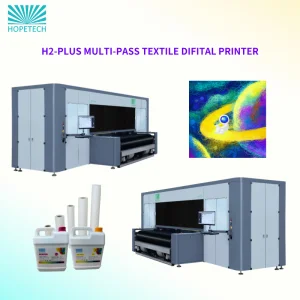
Explore our technical components, multi-pass textile digital printers, and medical-grade hyperbaric rehabilitation systems.
 Vector Print