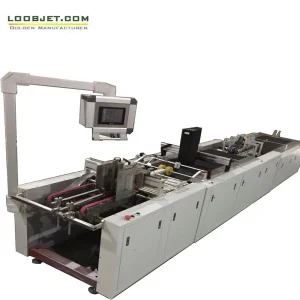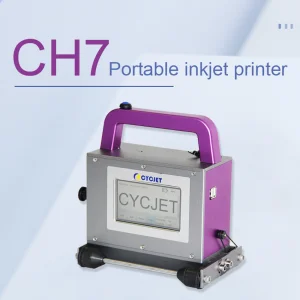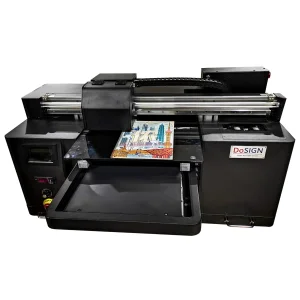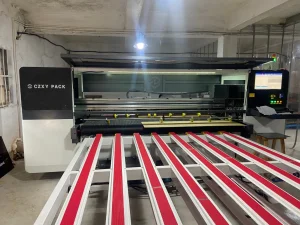
In the modern manufacturing paradigm, the transition from conventional analog printing technologies (such as flexography, gravure, and rotary screen printing) to dynamic, high-speed digital inkjet systems represents a critical turning point. The global industrial digital printing services market, currently projected to surpass USD 45 billion by 2028, is driven by the urgent mandate for localized customization, zero inventory targets, and stringent environmental compliance (especially under ESG directives).
Digital printing systems eliminate the capital-intensive and time-consuming processes of plate fabrication, screen prep, and mechanical adjustments. In their place, Drop-on-Demand (DoD) piezoelectric printhead control and automated RIP (Raster Image Processor) software architectures enable direct translation from design to physical substrate. This technology is no longer restricted to short-run graphics; it has expanded into heavy industrial applications including packaging, technical textiles, architectural laminates, automotive dashboards, and advanced medical diagnostics.
As global supply chains adjust to post-pandemic vulnerabilities, enterprises require agile manufacturing hubs that can design, prototype, and manufacture custom printing hardware at scale. This is where Chinese digital printing equipment manufacturers have evolved. By establishing end-to-end component hubs, developing proprietary control electronics, and adopting rigorous quality assessment standards, Chinese exporters have transitioned from basic equipment assemblers into critical R&D partners for global industrial brands.
Zhuhai Vector Print Co., Ltd. is a technology-driven enterprise specializing in advanced industrial inkjet printing solutions for modern manufacturing. Located in Zhuhai, a key innovation hub in southern China, the company focuses on developing high-performance systems that deliver precision, speed, and reliability across diverse industrial applications.
The company’s core product portfolio includes Single Pass Inkjet Printing Machines, Multi Pass Digital Inkjet Printers, High-Speed Scanning Inkjet Systems, and Industrial Inkjet Printing Controllers. These solutions are engineered to meet the evolving demands of industries such as ceramics, packaging, textiles, and building materials, enabling high-resolution output and consistent production quality.
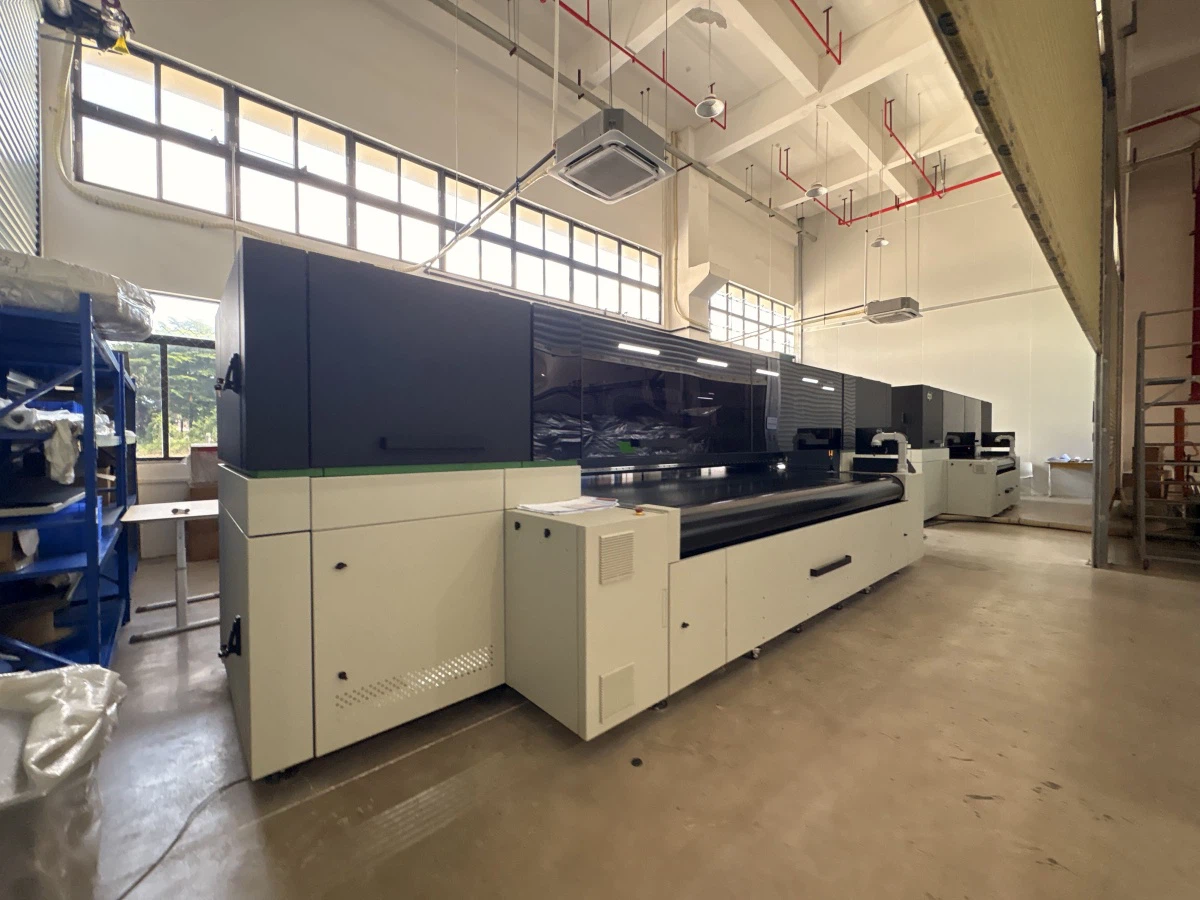
Operating from a well-equipped, ISO-certified production facility, Zhuhai Vector Print is supported by a skilled team of engineers, R&D specialists, and technical service professionals. By integrating advanced printhead technology, intelligent control systems, and optimized ink delivery solutions, the company ensures stable performance and efficient workflow integration.
Committed to innovation and customer satisfaction, Zhuhai Vector Print continues to invest in research and development while expanding its global presence. The company aims to provide reliable, scalable, and future-ready inkjet printing systems that help manufacturers enhance productivity and stay competitive in a rapidly evolving market.
Their engineering core focuses on the stabilization of fluid mechanics in high-speed ink channels. Because digital inks must withstand shear forces in sub-picoliter nozzles without dynamic viscosity breakdown, Zhuhai Vector Print develops custom wave-form control algorithms. This ensures that printheads from leading suppliers run at maximum native speeds without high-frequency drop misplacement.
The commercial competitiveness of Chinese digital printing factories is built on structural efficiencies rather than simple labor cost advantages. These industrial clusters—primarily located in the Pearl River Delta (PRD) and Yangtze River Delta (YRD)—provide unique operational benefits for global B2B procurement managers:
All crucial component suppliers—from optical encoders and aluminum alloy chassis to FPGA control boards and ink formula labs—are located within a 50-kilometer radius. This minimizes logistics friction and speeds up component verification.
Chinese engineering teams can turn a customer's industrial design concept into a working mechanical prototype within weeks, rather than quarters. This flexibility allows for immediate market adjustments.
Modern Chinese facilities use coordinate measuring machines (CMM), laser interferometers for guide-rail alignment, and automated software test benches to ensure zero-defect production before global shipping.
This integrated manufacturing setup ensures that high-speed marking equipment, UV single-pass machines, and industrial packaging controllers can be configured for specific manufacturing environments while remaining cost-effective.
Digital printing systems must meet the mechanical and chemical requirements of their specific target industries. Below is an overview of how these modern digital and marking systems are deployed across key commercial sectors:
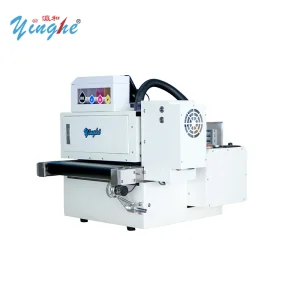
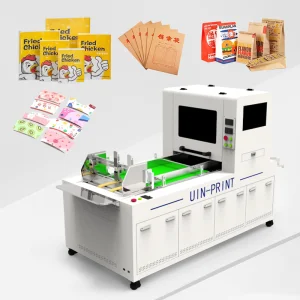
Using Single Pass technology (where the printhead assembly remains fixed and the packaging substrate moves underneath), facilities can achieve line speeds of over 100 meters per minute. CMYK water-based pigment inks or UV LED curable chemistries are applied directly onto raw corrugated kraft boards, paper shopping bags, and cosmetic cartons. This setup supports variable data input, allowing for custom barcodes, QR codes, and localized branding on every single box without slowing down the line.
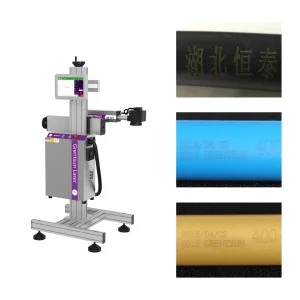
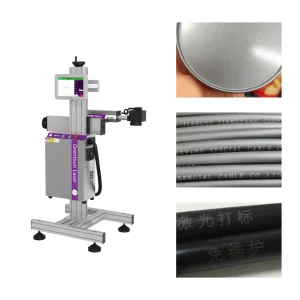
In high-volume manufacturing environments, such as extrusion lines for fiber-optic cabling, PVC piping, and pharmaceutical blister packs, speed and marking durability are critical. Integrating a 30W/50W fiber laser printing machine with a high-resolution rotary encoder allows marking systems to operate at speeds up to 700 meters per minute. The 1064nm wavelength interacts with polymers and metals, creating permanent, chemical-resistant markings that survive harsh industrial shipping and handling.
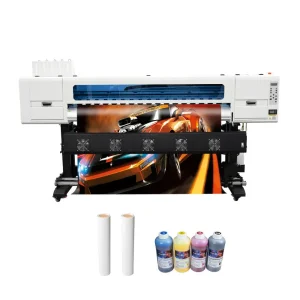
The apparel and technical textile industries rely heavily on short-run production. DTF (Direct-to-Film) printing systems print high-resolution pigment designs onto PET release liner films. These designs are then cured with hot-melt polyurethane powder and heat-transferred onto cotton, polyester, or blended garments. In addition, roll-to-roll high-speed scanning systems (reaching 80 sqm/h or more) apply reactive or dye-sublimation inks directly to fabrics, offering a cleaner, more water-efficient alternative to traditional screen printing.
Eco-Note: Digital textile jetting reduces water consumption by up to 90% and chemical runoffs by 85% compared to analog screen printing mills. This helps global brands meet international clean-production certifications.
The digital jetting sector is shifting toward cloud-connected, self-calibrating systems. Modern printing lines generate significant telemetry data that can be analyzed to improve efficiency:
Evaluating digital printing suppliers requires looking beyond the initial machine price. Procurement teams must calculate the Total Cost of Ownership (TCO) across several key operation metrics:
| Evaluation Parameter | Technical Threshold Metric | Business Performance Impact | Risk Mitigation Level |
|---|---|---|---|
| Printhead Duty Cycle | > 50 Billion Actuations per Nozzle | Long-term capital stability; minimizes printhead replacement expenses. | High: Prevents unexpected line downtime during peak production. |
| Waveform Control Versatility | Proprietary open SDK board integration | Allows the use of third-party ink formulas, lowering consumable costs. | Medium: Reduces reliance on single-source ink suppliers. |
| Encoder Spatial Tracking Accuracy | Sub-micron resolution at 700m/min | Guarantees crisp barcode readability and clean variable text layouts. | High: Minimizes product rejections due to unreadable codes. |
| VOC Emission Compliance | Zero-solvent Aqueous / UV LED formulations | Ensures compliance with international environmental standards. | High: Protects facilities from chemical safety penalties. |
| SLA Remote Assistance Response | < 4 Hours digital diagnostic turnaround | Minimizes downtime through guided remote troubleshooting. | Medium: Ensures access to expert support without onsite delays. |
How do Single Pass and Multi Pass scanning systems differ in throughput and print resolution?
Single Pass printing uses a stationary array of printheads span the width of the print bed. The substrate passes under the array in a single motion, enabling high production speeds (from 50 to over 150 meters per minute) that match conventional production lines. However, print resolution is limited by the physical nozzle spacing of the printhead array. In contrast, Multi Pass scanning systems move the printhead carriage back and forth across the substrate as it advances. This allows for higher resolutions through multiple overlapping print passes, but at lower speeds, making it better suited for detailed graphics and shorter production runs.
Why is an active encoder loop necessary for high-speed laser marking systems?
At speeds up to 700 meters per minute, any variation in the speed of the production line can warp and stretch printed codes, making them unreadable. An active encoder loop tracks the movement of the line in real-time. The marking controller uses this feedback to adjust the laser firing rate and galvo mirror positioning, keeping the marking dimensions accurate regardless of speed changes on the conveyor.
What ink delivery architectures are used to handle high-viscosity inks?
To prevent nozzle clogging and ink settling, systems use an active ink recirculation loop. Ink is continuously circulated through the printhead manifold, keeping it at a uniform temperature and viscosity. This setup prevents pigments from settling out of suspension and sweeps away microbubbles that can disrupt jetting.
How does UV LED curing compare to conventional mercury vapor lamps?
UV LED curing systems emit narrow-band UV light (typically 365nm or 395nm) that cures specialized photopolymer inks instantly. Unlike mercury vapor systems, LEDs produce minimal heat, allowing for printing on thin, heat-sensitive plastic films without warping. They also start up instantly with no warm-up time, use up to 70% less energy, and have a operating lifespan of over 20,000 hours, compared to the 1,000-hour limit of mercury lamps.
What is required to integrate custom controllers with existing factory ERP/MES software?
Modern industrial inkjet controllers use standard TCP/IP communication protocols and open API libraries. This allows factory engineers to connect printing lines directly to their Manufacturing Execution Systems (MES) and ERP platforms. Jobs, variable data assets, serial numbers, and target quantities are sent to the printing system automatically, reducing manual setup and keeping tracking data accurate.
 Vector Print