Why Are Factories Adopting Smart Management Systems in 2026?

Time:2026-10-27 Author:Sophia
0%

In 2026, factory floors are becoming more connected, measurable, and demanding. Managers now monitor production lines through live dashboards instead of relying only on end-of-shift reports. Sensors track machine temperature, vibration, energy use, and output quality. These details can reveal a failing bearing before it stops an entire line. The question is no longer whether factories can collect data. It is why factories are adopting smart management systems when traditional methods still appear familiar.

The answer involves pressure, visibility, and practical control. Smart systems can connect production planning, inventory, maintenance, safety records, and quality checks in one environment. A supervisor may receive an alert on a tablet while walking beside an assembly cell. A maintenance technician can review equipment history before opening a machine. Procurement teams can also see material shortages earlier, reducing rushed decisions and avoidable delays. These improvements support more consistent operations, but they do not guarantee success.

Implementation can be messy. Poor sensor placement creates unreliable readings. Old machinery may not communicate easily with modern software. Employees may distrust automated recommendations, especially when training is rushed. Real experience shows that technology works best when workers understand its purpose and can challenge incorrect results. Managers must protect data, document decisions, and measure outcomes beyond impressive dashboards. Lower downtime matters. So does safer work, stable quality, and realistic employee adoption. The smartest system may still fail if it ignores the people using it.
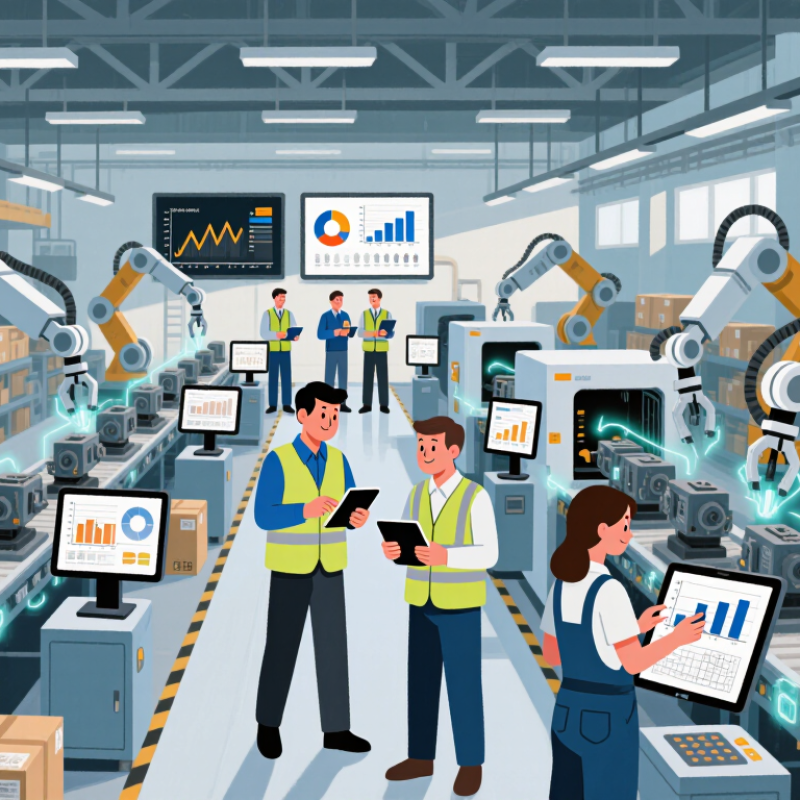
Why Are Factories Adopting Smart Management Systems in 2026?

What Smart Management Systems Are and How They Work

Smart management systems are digital platforms that connect production equipment, workers, inventory, maintenance, and quality records. They turn scattered factory information into one operational view. A typical system combines sensors, machine controllers, software databases, and management dashboards. It may track temperature, cycle time, material usage, product defects, and equipment status.

The process begins when sensors collect machine data every few seconds. A secure gateway transfers that data to a central platform. The system then cleans inconsistent readings and compares them with production targets. If a motor vibrates beyond its normal range, the maintenance team receives an alert before a breakdown occurs. If a batch shows unusual defect patterns, quality staff can inspect the line immediately. Operators still approve important actions. Automation should support judgment, not erase it.

In daily use, managers can view live output on a screen near the production floor. A supervisor might notice that one line loses twelve minutes after each material change. The system records the delay, links it to work orders, and helps identify repeated causes. From practical implementation, clean data matters more than impressive dashboards. Old machines may provide incomplete signals. Alerts can also become noisy and ignored. Staff training, access controls, and regular data checks remain essential. Some factories discover that their first system exposes process weaknesses rather than fixing them. That discomfort is useful, but improvement still requires patient human review.

Why Factories Are Turning to Smart Management in 2026

Factories are turning to smart management in 2026 because daily decisions now depend on speed, accuracy, and traceable information. In plant reviews, managers often find delays hidden between production, maintenance, and purchasing teams. A smart system connects these activities through shared dashboards and live equipment data. Operators can see a rising motor temperature before a breakdown stops the line. Maintenance teams receive clearer work priorities instead of relying on memory or paper logs.

The pressure is practical. Energy costs fluctuate, skilled technicians are limited, and customers expect consistent delivery records. Smart management helps factories compare output, downtime, waste, and power use by shift. A supervisor may notice that one aging machine consumes more electricity during evening production. That detail can support a safer maintenance decision and a more realistic production plan. It also strengthens reporting because the system preserves timestamps, inspection results, and approval records.

Implementation is not effortless. Bad sensor readings can produce confident but wrong recommendations. Some workers may distrust a dashboard that ignores local experience. Algorithms can also miss unusual failures, especially when equipment has recently changed. Human review still matters. Training must include practical drills, not only online instructions. Factories need access controls, backup procedures, and regular data checks to protect operational reliability. The strongest programs usually improve gradually, although slow adoption can feel frustrating on a busy factory floor.

Key Technologies Behind Modern Factory Management Systems

Why Are Factories Adopting Smart Management Systems in 2026?

Modern factory management systems connect machines, workers, materials, and production data in one operating view. Industrial Internet of Things sensors track vibration, temperature, energy use, and machine speed. Managers can spot unusual patterns before a small fault becomes costly downtime. This works best when sensors are calibrated and maintenance teams understand the data. Technology alone cannot repair a neglected process.

Cloud platforms now support real-time dashboards across production lines and facilities. Edge computing processes urgent data near the machine, reducing delays during quality checks. Artificial intelligence can forecast maintenance needs and identify defects through camera-based inspection. Digital twins also model production changes before managers adjust the physical line. However, predictions may fail when historical data is incomplete, biased, or poorly labeled. That weakness deserves attention.

Tips: Start with one measurable problem, such as excessive changeover time. Connect only essential machines at first. Use role-based access, encrypted records, and regular system audits. Train operators with practical examples, including false alarms and sensor failures. Keep a manual backup process. It may feel old-fashioned, but it protects production during network outages. Review the system monthly and question whether each alert improves safety, quality, or delivery performance.

Why Are Factories Adopting Smart Management Systems in 2026? — Key Technologies Behind Modern Factory Management Systems
Technology Primary Management Challenge Operational Data Captured Management Decisions Enabled Evidence-Based KPI Relevant Standard or Protocol Expected Business Value
Industrial IoT Sensors
Connected sensors for machines, utilities, materials, and work areas.
Limited visibility into machine condition, production status, and environmental conditions. Temperature, vibration, pressure, current, flow, humidity, speed, cycle status, and equipment state. Identify abnormal conditions, compare assets, monitor production status, and prioritize inspections. Unplanned downtime, availability, mean time between failures, and sensor data quality. Industrial communication models and plant integration practices.
ISA-95 / IEC 62264
More timely operational information and earlier detection of developing equipment problems.
Edge Computing
Local processing positioned near machines and production lines.
Cloud-only architectures can create dependency on network availability and increase data-transfer volume. High-frequency machine signals, event streams, alarms, and locally calculated production indicators. Trigger local alerts, filter data, continue monitoring during connectivity interruptions, and send summarized information to central systems. Data-processing latency, network availability, event-loss rate, and bandwidth consumption. Local industrial data processing and interoperable machine communication.
OPC UA / IEC 62541
Faster operational response, reduced transmission volume, and improved resilience for time-sensitive applications.
Manufacturing Execution Systems
Software that coordinates production orders, work instructions, quality records, and traceability.
Disconnected planning, production, quality, maintenance, and inventory information. Work orders, quantities, labor, material genealogy, process parameters, downtime reasons, and quality results. Schedule work, track order progress, enforce procedures, trace materials, and identify production losses. Overall equipment effectiveness, schedule adherence, first-pass yield, and order-to-completion time. Enterprise-to-control-system integration models.
ISA-95 / IEC 62264
ISO 22400
Stronger production control, more consistent records, and improved traceability across manufacturing operations.
Artificial Intelligence for Predictive Maintenance
Analytical models that detect patterns associated with equipment degradation.
Reactive maintenance and fixed schedules may replace parts too early or miss emerging failures. Vibration, temperature, electrical signatures, maintenance history, alarm history, load, and operating context. Rank asset risk, recommend inspections, estimate remaining useful life where sufficient data exists, and reduce unnecessary interventions. False-alarm rate, detection lead time, maintenance-related downtime, and maintenance cost per asset. Reliability analysis should be aligned with documented maintenance processes and asset data governance.
ISO 14224
Better maintenance prioritization and improved use of technicians, spare parts, and production windows.
Digital Twins and Process Simulation
Data-linked virtual representations of assets, lines, or production processes.
Changes to equipment, layouts, or process settings can be expensive and risky to test directly on the shop floor. Asset structure, process parameters, cycle times, production constraints, energy data, and historical performance. Evaluate capacity, test scenarios, identify bottlenecks, support commissioning, and compare expected versus actual performance. Throughput, cycle time, bottleneck utilization, changeover time, and simulation-to-reality variance. Product and production lifecycle data can be organized using structured industrial information models.
ISO 23247
Lower implementation risk and better evidence for investment, layout, scheduling, and process-improvement decisions.
Computer Vision and Automated Inspection
Cameras and image-processing models used to inspect products and processes.
Manual inspection can be inconsistent, difficult to scale, and dependent on operator availability. Images, defect classifications, dimensions, surface conditions, barcode or mark verification, and inspection timestamps. Detect defects, verify assembly, separate nonconforming products, and identify recurring process patterns. Defect rate, false reject rate, escape rate, inspection coverage, and first-pass yield. Quality records should be connected to formal nonconformity and corrective-action processes.
ISO 9001
More consistent inspection, faster feedback to production, and improved defect traceability.
Industrial Energy Management
Monitoring and control of electricity, fuel, steam, compressed air, water, and process heat.
Energy losses are often distributed across equipment, utilities, shifts, and production conditions. Energy consumption, demand peaks, power quality, utility flow, operating hours, production volume, and emissions-related data. Find abnormal consumption, compare energy performance, manage demand, and prioritize efficiency projects. Energy intensity per unit of output, peak demand, utility loss rate, and energy cost per production order. Energy performance monitoring and continual improvement framework.
ISO 50001
Lower energy waste, stronger cost control, and more reliable reporting of energy-performance improvements.
Industrial Cybersecurity and Access Management
Protection of operational technology, connected devices, networks, applications, and user identities.
Greater connectivity increases the number of potential entry points and the impact of unauthorized changes. Authentication events, network flows, configuration changes, vulnerabilities, alarms, backups, and security incidents. Control access, segment networks, detect unusual behavior, manage vulnerabilities, and recover from incidents. Patch compliance, privileged-access review rate, incident response time, backup recovery success, and unresolved critical vulnerabilities. Security lifecycle and control requirements for industrial automation and control systems.
IEC 62443
Improved operational resilience, reduced cyber risk, and safer expansion of connected factory systems.
Cloud-Based Analytics and Unified Data Platforms
Centralized storage and analysis for production, quality, maintenance, supply-chain, and energy data.
Data held in separate systems makes cross-functional analysis and plant-to-plant comparison difficult. Time-series data, production transactions, quality records, maintenance events, inventory movements, and energy indicators. Compare sites, identify systemic losses, build dashboards, govern data definitions, and support management reporting. Data completeness, data latency, report generation time, cross-system reconciliation rate, and analytics adoption. Interoperability depends on consistent information models, interfaces, and secure data exchange.
OPC UA / IEC 62541
ISA-95 / IEC 62264
More consistent performance management and faster conversion of operational data into actionable insight.

KPI definitions should be agreed at plant level and calculated using consistent time periods, asset boundaries, production quantities, and data-quality rules. Standards listed above provide recognized frameworks; they do not guarantee a specific performance improvement without effective implementation and continuous measurement.

Operational Benefits for Productivity, Quality, and Cost Control

Factories are adopting smart management systems in 2026 because daily performance needs clearer control. In plant reviews, managers often find delays hiding between production, quality, and maintenance teams. A connected system brings machine status, work orders, inspection results, and energy readings into one operational view. This does not make decisions automatically. It gives supervisors better evidence before they adjust schedules, staffing, or materials. Small signals matter. A repeated five-minute stoppage can reveal a tooling problem before output drops.

Productivity improves when teams respond to facts rather than assumptions. Live production boards can show bottlenecks, idle equipment, and unfinished orders. Quality teams can trace a defect to its process step, shift, or inspection record. That supports faster containment and more consistent corrective action.

Cost control also becomes practical. Managers can compare planned labor, scrap, energy use, and downtime with actual results. Yet implementation is rarely smooth. Poor data entry still creates poor decisions, and some workers may resist new screens. That weakness deserves attention, not blame.

Tips: Start with one measurable problem, such as unplanned downtime or rising scrap. Clean the underlying data before adding complex dashboards. Set role-based access and review records regularly. Train operators beside the equipment, using real shift examples. Keep a manual fallback during system outages. Review benefits monthly, but question the numbers when results look unusually perfect. Human judgment remains necessary. Technology helps most when it strengthens disciplined daily work.

Challenges and Future Development of Smart Factory Management

Why Are Factories Adopting Smart Management Systems in 2026?

Factories are adopting smart management systems to connect machines, workers, energy use, and production data. In practice, this means fewer blind spots on busy production floors. A dashboard may show a motor’s rising temperature before a costly shutdown occurs. Managers can also compare output, waste, and maintenance records across shifts. Yet installation is rarely simple. Many factories still rely on aging equipment, handwritten logs, or disconnected software. Integration can take longer than expected. That reality is often underestimated.

Data quality creates another serious challenge. Sensors may produce incomplete readings, while different departments measure performance differently. Poor data can lead to confident but incorrect decisions. Cybersecurity also requires constant attention, especially when factory networks connect with external systems. Access controls, regular audits, and employee training should become routine practices. However, smaller manufacturers may lack specialists and funding. Their systems can remain exposed despite careful intentions.

Future development will depend on practical, staged improvements rather than impressive demonstrations. Edge computing may help factories process urgent information near the machine. Digital twins could test production changes without interrupting real operations. Artificial intelligence may support forecasting, but human engineers must review unusual recommendations. Some pilots will fail. That is useful, if teams record why. Future systems should also measure energy consumption, worker safety, and repairability, not only speed. Standards for data sharing may improve cooperation between equipment and software providers. Still, perfect automation is unrealistic. Factories will need flexible systems, skilled people, and honest performance reviews.

Why Are Factories Adopting Smart Management Systems in 2026?

Global industrial robot installations provide a measurable indicator of the shift toward connected, automated, and data-driven factory management.

What the trend suggests

Annual industrial robot installations increased from approximately 373,000 units in 2019 to more than 541,000 units in 2023. This growth reflects manufacturers’ efforts to improve productivity, quality control, workplace safety, and real-time operational visibility. The main challenges remain integration with legacy equipment, cybersecurity, data quality, workforce skills, and the cost of scaling pilot projects across entire production networks.

Source: International Federation of Robotics, World Robotics 2020–2024. Values are global annual installations in thousands of units.

FAQS

What is a smart management system?

It connects machines, workers, materials, maintenance, and quality records. Managers see one operational view. Data becomes easier to compare.

How does the system collect factory information?

Sensors record temperature, vibration, speed, energy use, and cycle time. A secure gateway sends readings to a central platform. The system cleans inconsistent data before analysis.

Can the system prevent equipment breakdowns?

It can identify unusual vibration or temperature patterns early. Maintenance teams may receive alerts before a motor fails. Prediction is not certainty.

How does it support quality control?

The system links defects with process steps, shifts, and inspection records. Quality staff can investigate unusual patterns quickly. Camera-based inspection may help, but poor labels reduce accuracy.

What productivity improvements are possible?

Live dashboards can show bottlenecks, idle equipment, and unfinished orders. Managers may discover repeated delays after material changes. Small delays matter.

Can smart systems reduce factory costs?

They compare planned labor, scrap, energy use, and downtime with actual results. This helps managers locate waste and recurring losses. Perfect numbers deserve suspicion.

What problems can appear during implementation?

Old machines may provide incomplete signals. Too many alerts can become background noise. Workers may resist unfamiliar screens, especially without practical training.

How should a factory begin using this technology?

Start with one measurable problem, such as downtime or long changeovers. Connect only essential machines at the beginning. Keep a manual backup process.

What security and reliability practices are important?

Use role-based access, encrypted records, regular audits, and monthly data checks. Train operators beside real equipment. Network outages still happen.

Does automation replace human judgment?

No. Operators should approve important actions and review unusual results. Technology supports decisions rather than removing responsibility. Human review remains necessary.

Conclusion

Smart management systems connect machines, production lines, employees, and business data through a unified digital platform. Using sensors, industrial networks, cloud or edge computing, artificial intelligence, and real-time analytics, these systems help factories monitor operations, identify problems, and coordinate decisions more efficiently. In 2026, why factories are adopting smart management systems is closely linked to rising production complexity, stronger customer expectations, labor challenges, and the need for faster, data-based responses.

Modern factory management systems can improve productivity by reducing downtime, balancing workflows, and supporting predictive maintenance. They also strengthen quality control by detecting unusual conditions early and tracking production information more accurately. Better visibility into materials, energy use, inventory, and equipment performance can reduce waste and operating costs. However, factories must still address cybersecurity, system integration, employee training, data accuracy, and investment concerns. Future development will likely focus on more autonomous decision-making, flexible production, sustainable operations, and safer collaboration between people and intelligent machines.

Sophia

Sophia

Sophia is a dedicated marketing professional with an exceptional depth of knowledge about her company's products and services. With a keen understanding of market trends and customer needs, she crafts insightful blog posts that not only inform but also engage readers, enriching the company’s online......