What Are the Latest Industrial Inkjet Trends in 2026?

Time:2026-11-03 Author:Aria
0%

Industrial inkjet is moving beyond a promise of speed. In 2026, buyers want dependable output, shorter changeovers, and clear cost-per-part figures. That shift is visible on factory floors: single-pass systems print directly onto packaging, panels, and shaped products, while machine vision checks registration and nozzle performance in real time. Small defects matter. One faint band can spoil a whole run.

So, what are the latest trends in industrial inkjet technology? Key developments include more capable printheads, improved ink recirculation, water-based formulations, and tighter integration with production software. AI-assisted monitoring can flag changes before they become costly rejects, though results depend on data quality and proper maintenance. Sustainability is also shaping equipment choices. Yet lower-impact inks do not automatically mean lower energy use or less waste. The details matter.

For context, Ralf Schlozer, an independent analyst of digital printing, offers a useful industry perspective. The following is a paraphrase, not a verbatim quotation: “Inkjet succeeds when print quality, productivity, and application economics work together.” That is the real test. A faster press may look impressive in a demo, but buyers should examine uptime, substrate range, service access, and the cost of consumables. This outline explores the technologies and production decisions behind the headlines—and where expectations may still run ahead of evidence.
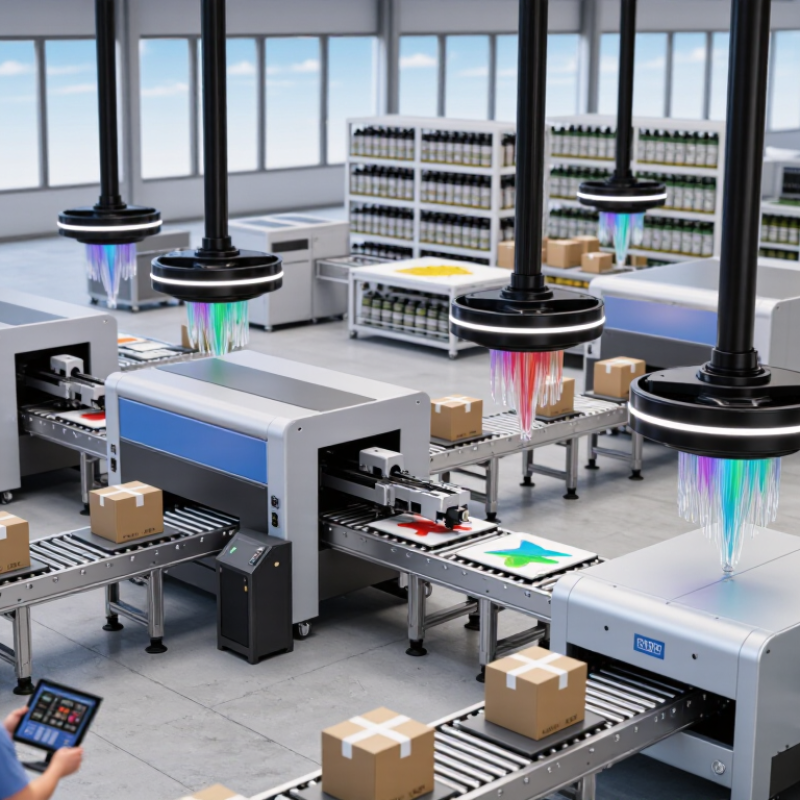
What Are the Latest Industrial Inkjet Trends in 2026?

Industrial Inkjet Printing: Core Technologies and 2026 Landscape

What Are the Latest Industrial Inkjet Trends in 2026?
Industrial Inkjet Printing: Core Technologies and 2026 Landscape

In 2026, industrial inkjet development is less about one breakthrough and more about stable integration. Piezoelectric drop-on-demand heads place controlled droplets for graphics, coatings, and functional layers. Continuous inkjet remains useful for fast product coding. UV-curable, water-based, and solvent inks suit different substrates and drying conditions. No single ink works everywhere.

Factories are connecting printers with inline cameras, production software, and automated quality checks. Vision systems can flag a missing nozzle or a small registration shift before many parts are affected. Better drop control can reduce overspray and improve fine detail, but results still depend on surface energy, temperature, and ink viscosity. Operators must balance line speed against curing time and image quality. A clean test chart is not the whole story. Real production varies.

Tips: Test on the actual substrate, not just a similar sample. Record nozzle checks, humidity, and curing settings alongside each run. Allow time for cleaning and calibration; uptime estimates often look neater on paper than on a busy line.

Printhead, Ink, and Substrate Innovations

In 2026, industrial inkjet advances are converging around printheads, inks, and substrates. Improved nozzle monitoring and waveform control help maintain consistent droplets across long production runs. Smaller drops can sharpen fine text and edges, but they may demand cleaner surfaces and tighter process control. Smithers’ The Future of Inkjet Printing to 2027 estimated the global inkjet market at US$86.4 billion in 2022, forecasting US$118.2 billion by 2027. That forecast signals expanding use, though it does not guarantee every application will benefit equally.

Ink development is broadening the options: water-based formulations can suit porous materials, while UV-curable inks can help print on non-absorbent films. Adhesion and curing still need careful testing. Substrate innovation matters just as much. Recycled corrugated board, textured paper, and flexible films can vary in absorbency, surface energy, and thickness. A fine image on a sample sheet may look different on a moving production line. Small changes matter. Finer droplets do not automatically produce better results.

Tips: Test the printhead, ink, and actual substrate together. Record drop consistency, curing settings, adhesion, and color after abrasion. Repeat at production speed, not just on a bench. Expect occasional surprises.

AI, Automation, and Connected Inkjet Production

In 2026, industrial inkjet production is moving toward smarter, more connected workflows. AI tools can help operators spot changes in print quality, such as a faint band across a label or small shifts in color density. Paired with camera inspection and production data, these tools may flag issues before a full batch is affected. They do not replace skilled judgment. A sensor can raise an alert, but an experienced operator still needs to check the printhead, ink supply, and substrate.

Automation is also linking printing with job setup, material handling, and maintenance records. Connected equipment can share information about print speed, nozzle performance, and downtime, helping teams find recurring bottlenecks. This is useful on busy lines with frequent job changes. Yet integration takes work: inconsistent data, older machinery, and unclear alert settings can slow progress. Not every factory will benefit from adding more dashboards. Some systems still miss context.

Tips: Start with one measurable problem, such as reducing setup checks or catching defects earlier. Record a baseline, test the change on a limited production run, and compare results. Keep human review in the loop, especially when alerts are unclear. Reliable improvement can be gradual. Sometimes the best insight comes from a simple, well-kept maintenance log.

Emerging Applications Across Industrial Sectors

Industrial inkjet is moving beyond dates and labels into functional production. In packaging plants, high-resolution systems print variable codes, traceability marks, and small graphics directly onto cartons and flexible films. Operators can change data without replacing plates. That matters on short runs.

In electronics, precise drops can deposit conductive or insulating materials onto circuit components and sensors. The same contact-free approach is useful for marking cables, coating selected surfaces, and applying adhesives in automotive assembly. On a factory floor, a nozzle may place a narrow bead beside a connector, while vision systems check alignment. Small shifts matter. Yet dust, vibration, and surface variation can disrupt results, so calibration and cleaning remain routine work.

Textile and building-material producers are also exploring digital decoration. Inkjet can add patterns to fabric, ceramic tile, or wood-look panels with less setup between designs. Food and pharmaceutical packaging uses are growing too, especially for readable codes and changing batch information. The less glamorous issue is consistency: inks must suit each substrate, and curing needs to match production speed. Some applications still struggle with cost or durability. That is worth admitting. A successful trial on a clean sample does not guarantee stable output across a full shift. Engineers increasingly test print quality, adhesion, and maintenance needs under actual line conditions. This makes industrial inkjet less of a drop-in upgrade and more of a process-design choice.

Sustainability and Operational Challenges in 2026

In 2026, industrial inkjet sustainability is less about one “green” ink and more about the whole production line. Water-based formulations may reduce some emissions, while UV-curable systems can support fast curing. Neither suits every substrate or process. Operators should assess energy per good print, ink waste, cleaning fluid, and rejected material—not just ink labels. Small measurements matter.

Operational pressure is rising as printers handle shorter runs, more variable materials, and tighter delivery windows. Automated nozzle checks and drop monitoring can catch banding before a full batch is spoiled. But sensors do not remove routine work: printheads still need careful cleaning, stable humidity, and documented maintenance. One missed check can turn a quiet shift into scrap. That cost is easy to underestimate.

Energy demand also deserves scrutiny. Dryers, curing units, and compressed-air systems may use more power than the printer itself. Facilities can log idle time, warm-up cycles, and reprints, then compare results across jobs. Digital tracking helps, but poor input data creates false confidence. Some upgrades will not pay back quickly, especially where volumes are low or substrates keep changing. That is worth admitting. Practical progress comes from testing one change at a time, recording trade-offs, and revisiting assumptions.

FAQS

How can AI help monitor industrial inkjet quality?

Camera systems can flag faint bands or small color shifts. Operators should still inspect the printhead, ink supply, and substrate. Alerts can miss context.

Does connected equipment make production easier?

It can share print speed, nozzle performance, and downtime records. This helps teams spot recurring bottlenecks. Older machines and inconsistent data can complicate setup.

What is a practical way to introduce automation?

Start with one measurable problem, such as reducing setup checks. Record current results, test a limited run, then compare. Keep the test small.

Where is industrial inkjet used beyond labels?

It can print variable codes on cartons and films, deposit materials on electronics, and apply adhesives near connectors. Textile and building-material producers also use it for decoration.

Why do print results vary between materials?

Inks must suit the substrate, and curing must match line speed. Dust, vibration, and surface changes can affect output. A clean sample is not enough.

What should manufacturers test before a full production run?

Check print quality, adhesion, and maintenance needs under real line conditions. A short trial may not reveal problems across a full shift. That deserves a second look.

How should a factory assess inkjet sustainability?

Track energy per good print, ink waste, cleaning fluid, and rejected material. Dryers and curing units may use more power than the printer itself. Labels alone are not proof.

Can sensors eliminate routine printer maintenance?

No. Printheads still need careful cleaning, stable humidity, and documented checks. One missed inspection can lead to scrap. Small costs add up.

Conclusion

In 2026, industrial inkjet printing is evolving through improvements in printhead precision, ink performance, and compatibility with a wider range of substrates. These advances help manufacturers produce clearer, more consistent results while adapting to different materials and production requirements. If you’re asking what are the latest trends in industrial inkjet technology, a major theme is the shift from standalone printers toward connected, data-informed production systems.

Artificial intelligence and automation are helping monitor print quality, identify process variations, and reduce avoidable downtime. New applications are emerging across sectors that require flexible, customized, or traceable product marking and decoration. At the same time, sustainability is shaping decisions about ink use, energy consumption, waste, and equipment lifespan. Manufacturers adopting these technologies must balance faster, more adaptable production with practical challenges such as integration, workforce training, maintenance, and consistent quality across changing production conditions.

Aria

Aria

Aria is a dedicated marketing professional with a deep passion for innovative strategies and a keen understanding of our company's product offerings. With a wealth of experience in the industry, Aria excels at crafting engaging content that highlights the unique features and benefits of our......