How Digital Transformation Impacts the Ceramics Industry?

Time:2026-10-18 Author:Aria
0%

Digital transformation is reshaping how ceramic manufacturers design, produce, and deliver products. The question is not simply how digital transformation impacts the ceramics industry, but whether factories can convert data into reliable decisions. Ceramic World Review 2024 reported that global ceramic tile production remained above 16 billion square metres annually, creating enormous pressure to improve efficiency and consistency. At this scale, a small reduction in kiln fuel or rejected tiles can produce measurable savings. Sensors can monitor kiln temperature, moisture, pressure, and vibration in real time. Artificial intelligence can then identify patterns before cracks, warping, or glaze defects become visible.

The benefits are practical. A connected production line may adjust spray-drying conditions within minutes. Digital twins can test firing schedules before operators change a real kiln. The European Commission’s Ceramic Manufacturing Industry BREF identifies firing and drying as major energy-consuming stages, making process optimisation especially important. Meanwhile, Deloitte’s smart manufacturing research shows that manufacturers increasingly view connected technologies as essential for competitiveness and resilience. However, the transition is not automatic. Old machinery, incomplete records, weak cybersecurity, and limited digital skills can reduce the value of expensive systems. A dashboard alone cannot repair inconsistent raw materials. This is where many strategies remain too optimistic. Successful transformation requires trained operators, verified data, and measurable targets for energy, quality, maintenance, and delivery performance. The industry should move carefully, because speed without control may create new waste instead of removing it.
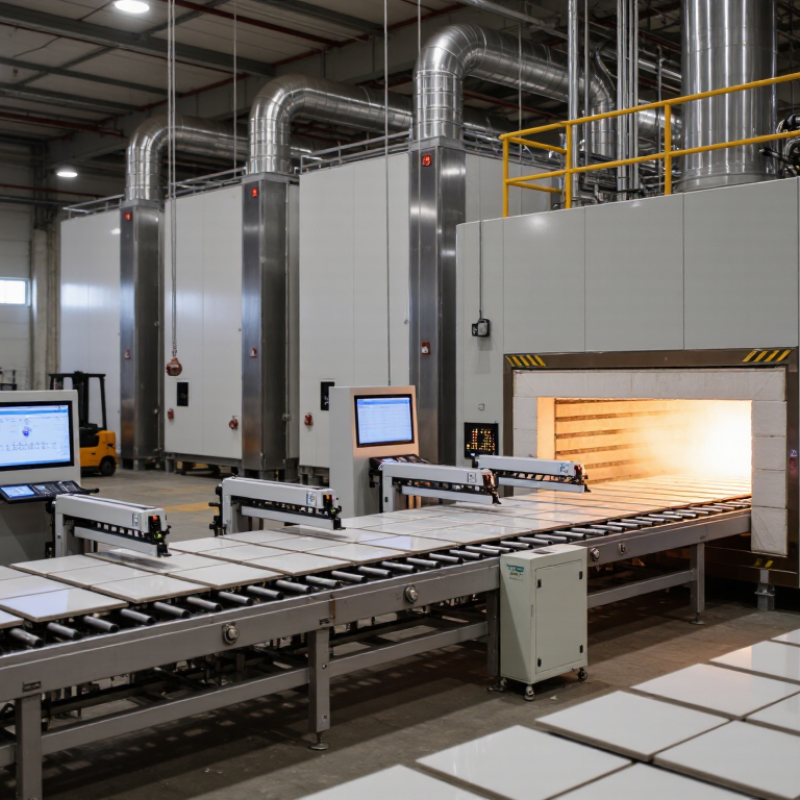
How Digital Transformation Impacts the Ceramics Industry?

Digital Transformation in the Ceramics Industry: Definition and Scope

Digital transformation in the ceramics industry means applying connected technologies to improve how ceramic products are designed, made, inspected, and delivered. It is more than replacing paper records with software. It links production data with practical decisions on the factory floor.

In a modern ceramics plant, sensors can track kiln temperature, pressure, humidity, and firing time. Operators can view these readings through a shared production platform. The system may identify uneven heating before cracked tiles appear. Digital design tools also help engineers test shapes, thicknesses, and surface patterns before physical trials. This can reduce material waste and shorten development cycles.

The scope extends across procurement, body preparation, glazing, firing, quality control, warehousing, and customer service. Machine vision can detect pinholes or color variation on moving lines. Predictive maintenance can warn technicians about unusual motor vibration. Yet technology does not remove human judgment. A sensor may report stable temperature while an operator notices an unfamiliar sound. That observation still matters.

Data integration remains difficult. Older equipment may use incompatible systems, and incomplete records can weaken accurate analysis. Employees also need training, not just new devices. In practice, successful transformation often begins with one measurable problem, such as excessive kiln energy or repeated glaze defects. The results should be checked against production records and worker experience. Digital tools can be powerful, but careless implementation may create expensive complexity instead.

Key Technologies Reshaping Ceramic Manufacturing

How Digital Transformation Impacts the Ceramics Industry?

Key Technologies Reshaping Ceramic Manufacturing

Digital transformation is changing ceramic manufacturing from reactive production to measurable control. Industrial IoT sensors can track kiln temperature, pressure, humidity, and vibration in real time. This data helps engineers detect uneven firing before entire batches become defective. The European Commission’s Best Available Techniques reference document identifies energy use, dust, and kiln emissions as major ceramic manufacturing concerns. Connected monitoring can address these issues with faster adjustments and clearer records.

Artificial intelligence can study firing curves, raw material moisture, and historical defects. It may recommend settings that reduce waste and improve consistency. Digital twins also simulate kiln behavior before operators change physical equipment. Robotics support material handling, glazing, inspection, and packaging. The International Federation of Robotics reported 541,302 industrial robot installations worldwide in 2023, showing how automation is expanding across manufacturing. Yet ceramics remains difficult. Clay varies naturally, and a model can learn the wrong lesson from poor data. That weakness is often ignored.

Tips: Start with one kiln and a few reliable sensors. Compare digital predictions with manual inspections for several production cycles. Keep operators involved. Their practical judgment still catches cracks, color shifts, and surface flaws that software may miss. Cloud platforms offer useful access, but edge computing can reduce delays during unstable network conditions. Cybersecurity also deserves attention, especially when production systems connect with external networks. Small, verified improvements are safer than a rushed factory-wide conversion.

How Digital Tools Improve Production Efficiency and Quality

Digital transformation is changing how ceramic factories control production, not merely how they record it. Sensors placed near kilns can track temperature, humidity, pressure, and firing time every few seconds. Operators see abnormal patterns before tiles develop cracks, warping, or uneven glaze. A 2023 smart manufacturing survey found that 86% of industrial leaders viewed connected production as important for future competitiveness. That expectation is understandable, but ceramic plants still need skilled judgment.

Machine-vision systems inspect tile surfaces under consistent lighting. They can detect pinholes, color variation, and edge damage more steadily than manual inspection. Digital production records also connect each defect with its clay batch, press setting, or kiln cycle. This shortens root-cause analysis. Industry 4.0 case studies reported productivity improvements of up to 50% in selected factories, according to a 2023 global manufacturing report. Results vary widely. Older equipment, unstable networks, and poor data discipline can reduce the benefit.

Predictive maintenance offers another practical gain. Vibration sensors may warn technicians about a failing fan before kiln airflow changes. Scheduling software can reduce idle time between pressing, drying, and firing. Energy dashboards reveal when a kiln consumes more power than its normal profile. The International Energy Agency identifies industry as one of the world’s largest energy-consuming sectors, making this visibility valuable. Still, automation is not automatically intelligent. Bad measurements create confident mistakes, and workers need time to challenge the system’s recommendations.

How Digital Transformation Impacts the Ceramics Industry? - How Digital Tools Improve Production Efficiency and Quality

Production Area Digital Tool or Application Traditional Challenge Typical Measurable Improvement Operational Effect Quality and Business Value
Overall Equipment Effectiveness Manufacturing Execution System (MES), machine connectivity, and real-time production dashboards Limited visibility into availability, performance, and quality losses OEE improvement of approximately 10–20 percentage points Production losses can be identified and corrected during the shift instead of after reporting Higher capacity utilization, more reliable delivery schedules, and improved production planning
Unplanned Downtime Predictive maintenance using vibration, temperature, current, and operating-hour data Equipment failures cause unexpected stoppages and emergency repairs Unplanned downtime reduction of approximately 10–20% Maintenance is scheduled according to equipment condition rather than fixed intervals alone Fewer production interruptions, lower maintenance costs, and longer equipment service life
Kiln Performance IoT temperature sensors, automated kiln control, and process analytics Temperature variations create uneven firing, warpage, color differences, or cracks Process-variation reduction of approximately 10–30% Firing curves and operating conditions can be monitored continuously and adjusted faster More consistent product characteristics and fewer kiln-related quality deviations
First-Pass Yield Statistical process control, digital work instructions, and automated parameter tracking Defects are detected late, making root-cause analysis difficult First-pass yield improvement of approximately 5–15 percentage points Process parameters are linked with inspection results for faster corrective action Less rework, lower production cost, and more stable product quality
Defect and Scrap Rate Machine vision inspection, AI-assisted defect classification, and digital traceability Manual inspection can miss surface defects or produce inconsistent judgments Scrap and defect reduction of approximately 10–30% Cracks, pinholes, glaze defects, dimensional deviations, and surface irregularities can be detected earlier Improved quality consistency, reduced material waste, and better customer acceptance rates
Raw Material Control Digital batching systems, barcode or RFID tracking, and recipe management Manual weighing and material identification can create formulation errors Batching and material-related errors reduced by approximately 20–40% Materials, recipes, quantities, and operator actions are recorded electronically More consistent body and glaze composition, better traceability, and fewer batch deviations
Changeover Time Digital standard operating procedures, electronic checklists, and production sequencing tools Setup activities depend heavily on operator experience and paper instructions Changeover time reduction of approximately 20–40% Required tools, settings, recipes, and inspection steps are presented in a standardized sequence Greater production flexibility and improved responsiveness to smaller or customized orders
Energy Consumption Energy monitoring platforms, smart meters, kiln analytics, and automated control systems Energy losses are difficult to associate with specific equipment or production batches Energy consumption reduction of approximately 5–15% Energy use can be measured by kiln, line, product type, shift, or batch Lower operating costs, improved energy efficiency, and reduced emissions per unit produced
Production Traceability Cloud-based production records, barcode scanning, and batch genealogy systems Paper records make it difficult to trace materials, process conditions, and inspection results Traceability retrieval time reduced from hours to minutes Each batch can be connected with raw materials, equipment settings, operators, inspections, and dispatch information Faster investigation of quality issues, stronger compliance, and more effective customer support
Inventory Accuracy Warehouse Management System, barcode scanning, and real-time inventory synchronization Stock records may not reflect actual raw material, packaging, or finished-goods quantities Inventory accuracy commonly improved to above 95% Material movements and consumption are recorded at the point of use Fewer stockouts, lower excess inventory, and better production continuity
Production Planning Advanced Planning and Scheduling software integrated with MES and inventory data Schedules are frequently changed because of machine, material, or quality constraints Schedule adherence improvement of approximately 10–25% Planning considers capacity, maintenance, material availability, order priority, and changeover requirements More dependable delivery performance and improved use of production capacity
Operator Productivity Digital work instructions, mobile terminals, and automated data capture Operators spend time completing paperwork and searching for current procedures Administrative and data-entry time reduction of approximately 20–40% Instructions, alerts, records, and escalation workflows are available at the workstation More time for value-adding work, fewer recording errors, and faster employee training

Data note: The improvement figures are representative ranges commonly reported in public industrial digitalization and smart-manufacturing studies. Actual results vary according to plant size, equipment condition, process maturity, product mix, data quality, and implementation scope. No company-specific or brand-specific data is included.

Digital Supply Chains, Customer Service, and Market Development

How Digital Transformation Impacts the Ceramics Industry?

Digital Supply Chains, Customer Service, and Market Development

Digital transformation is reshaping ceramics through connected supply chains, responsive service, and sharper market decisions. A kiln dashboard can show firing temperatures, stock levels, and delayed deliveries in one working view. This reduces blind spots. Production teams can compare live data with customer orders before clay, glaze, or packaging runs short. Digital purchasing also links suppliers, warehouses, and transport schedules. However, inaccurate inputs still create confident mistakes. A wrong inventory count can stop a shipment despite sophisticated software.

Customer service becomes more precise when product information is available instantly. Staff can check batch details, dimensions, surface finishes, and delivery status without repeated phone calls. Customers may receive digital samples, care instructions, and realistic production updates. Clear communication builds trust, especially when handmade variations affect color or texture. Speed helps. Yet automated replies can feel cold when a shipment contains damaged tiles. Skilled employees still need to listen, investigate, and offer practical solutions.

Market development also changes through data. Sales teams can study regional preferences, project types, and recurring complaints. This evidence supports better collections and more efficient product testing. A hotel project may need slip-resistant flooring, while a residential buyer may value smaller formats and easier cleaning. Digital feedback reveals these differences earlier. Still, data cannot fully explain taste, craftsmanship, or cultural meaning. Manufacturers should combine analytics with showroom conversations and field experience. Otherwise, the market may receive efficient products that nobody truly wants.

Challenges and Future Directions of Ceramic Industry Digitization

Digital transformation is reshaping ceramic production, but factory reality remains uneven. A kiln may generate thousands of temperature readings each day. Yet many plants still record maintenance notes on paper. This gap creates expensive blind spots. Sensors can detect unstable firing zones, abnormal energy use, and delayed maintenance. However, dirty environments shorten sensor life. Dust and heat are persistent enemies. Data quality matters more than data volume.

Legacy equipment creates another barrier. Older kilns often lack compatible communication interfaces. Connecting them may require custom hardware and careful downtime planning. Small and medium-sized factories also face limited budgets and scarce technical staff. Cybersecurity deserves attention as well. Connected production systems can expose sensitive recipes, energy data, and operating schedules. Employee resistance is real. Workers may fear replacement instead of support. Training must show practical benefits, such as fewer manual checks and faster fault detection.

Future digitization should begin with measurable problems, not fashionable software. A factory could monitor one kiln, compare energy use, and verify defect rates over several months. Digital twins may later simulate firing schedules before production starts. Machine learning could identify subtle links between moisture, pressure, and cracking. The results will not always be perfect. Models can repeat old measurement errors. Human judgment still matters. Open data standards, repairable sensors, and modular systems would make adoption more realistic. Progress may look slower, but reliable progress is easier to maintain.

FAQS

What does digital transformation mean in ceramic manufacturing?

It connects production data with daily factory decisions. This includes design, forming, glazing, firing, inspection, storage, and delivery.

How can sensors improve kiln operations?

Sensors monitor temperature, pressure, humidity, and firing time. They may reveal uneven heating before cracked tiles appear. Data matters.

Can digital tools reduce material waste?

Yes. Design software can test thickness, shapes, and surface patterns before physical trials. However, poor data may create misleading recommendations.

How does machine vision support quality control?

Cameras can detect pinholes, color changes, and surface flaws on moving lines. Human checks remain useful because unusual defects may escape software.

What role can predictive maintenance play?

It tracks warning signs such as unusual motor vibration. Technicians can inspect equipment before a breakdown interrupts production. It is not perfect.

What difficulties do older factories face during digitization?

Older kilns may lack compatible communication systems. Custom hardware, planned downtime, and extra technical work may be necessary.

Why do workers still matter in a digital factory?

Operators notice sounds, cracks, and color shifts that sensors may miss. Training should support their judgment, not simply replace it.

How should a ceramics factory begin its digital transformation?

Start with one measurable issue, such as high kiln energy or repeated glaze defects. Use a few reliable sensors and compare results with manual inspections.

What cybersecurity concerns should connected production systems address?

Connected systems may expose recipes, energy records, and operating schedules. Access controls, secure networks, and careful system updates can reduce these risks.

What might ceramic manufacturing look like in the future?

Digital twins may test firing schedules before production begins. Machine learning may connect moisture, pressure, and cracking. The results will still need human review.

Conclusion

Digital transformation is reshaping the ceramics industry by connecting traditional craftsmanship with data-driven technologies. The phrase how digital transformation impacts the ceramics industry reflects a broad shift toward smart manufacturing, where automation, sensors, artificial intelligence, cloud platforms, and digital design tools support better decision-making. These technologies help manufacturers monitor equipment, optimize energy and material usage, detect defects earlier, and improve product consistency while reducing waste and production delays.

Beyond the factory floor, digital tools are strengthening supply chain coordination, inventory management, customer communication, and market development. Real-time data can improve demand forecasting, delivery planning, product customization, and after-sales service. However, successful digitization requires investment, employee training, reliable data protection, system integration, and a clear strategy for managing organizational change. In the future, the ceramics industry is likely to become more efficient, flexible, sustainable, and responsive as connected production systems and intelligent analytics continue to evolve.

Aria

Aria

Aria is a dedicated marketing professional with a deep passion for innovative strategies and a keen understanding of our company's product offerings. With a wealth of experience in the industry, Aria excels at crafting engaging content that highlights the unique features and benefits of our......